Introduction to Water Features
Water features have become an essential component of modern landscaping. From tranquil backyard ponds to striking fountains, the elegance they bring can transform outdoor areas into captivating retreats. Elements like the gentle sound of flowing water or the mesmerizing movement of fish in a pond create a serene atmosphere that entices relaxation and connection with nature. By incorporating water features into your landscaping, you can enhance the aesthetic appeal and even increase the value of your property.
What Are Water Features?
Water features encompass a wide range of installations designed to incorporate water into landscape design. They can include fountains, ponds, waterfalls, streams, and more. Each type serves a unique purpose and adds distinct character, integrating the natural element of water into your outdoor spaces. Beyond just decorative purposes, water features can also serve practical functions, such as irrigation or attracting wildlife.
Benefits of Adding Water Features
Incorporating water features into your landscape provides numerous advantages, including:
- Aesthetic Appeal: Water features enhance visual interest and can be stunning focal points in any garden.
- Creating Soundscapes: The soothing sounds of flowing water can mask unwanted noise from nearby streets and traffic.
- Wildlife Attraction: Water features attract various birds, insects, and even small mammals, enhancing biodiversity in your garden.
- Increased Property Value: Well-designed water features can add significant value to homes and properties, making them more desirable to potential buyers.
- Stress Reduction: Proximity to water has been linked to reduced stress levels and increased relaxation, providing an oasis from the daily hustle and bustle.
Popular Types of Water Features
When considering a water feature for your garden, it’s essential to understand the various types available. Here are some popular options:
- Ponds: These can be natural or artificial and provide a habitat for aquatic plants and fish.
- Fountains: Available in various styles, fountains add a decorative element while providing the soothing sounds of flowing water.
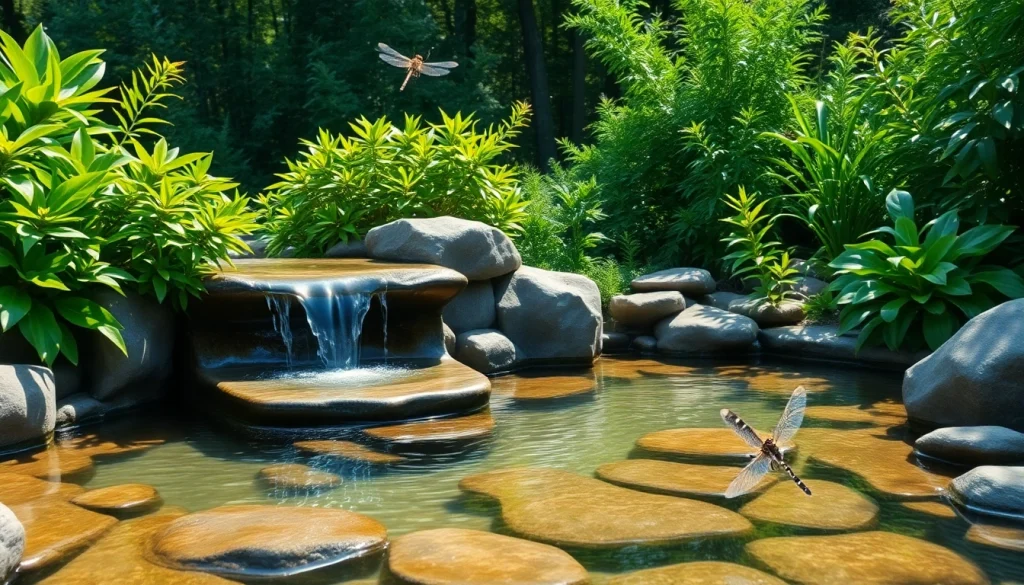
- Waterfalls: These create dramatic effects, mimicking natural landscapes by cascading water down rocks or ledges.
- Streams: Mimicking natural water bodies, streams bring movement and a dynamic element to landscapes.
- Wall Fountains: Ideal for small spaces, these can be mounted on walls, providing charm without taking up valuable ground space.
Design Ideas for Water Features
Designing a water feature involves more than just selecting a type; it requires thoughtful planning to ensure harmony with your landscape.
Integrating Water Features into Your Landscape
Successful integration of water features into your landscape can significantly enhance the overall aesthetic. Here are some design strategies:
- Placement: Ensure the water feature is centrally located or strategically placed to draw attention but does not obstruct pathways or views.
- Surrounding Elements: Use plants, rocks, and other natural materials to create a cohesive transition between the water feature and the landscape.
- Scale and Proportion: Consider the size of your space when selecting a water feature to avoid overwhelming smaller gardens.
Choosing the Right Style for Your Home
The style of your water feature should complement your home’s architecture and your garden’s theme. Here are some popular styles:
- Traditional: Incorporate classic designs such as tiered fountains or koi ponds surrounded by manicured gardens.
- Modern: Opt for sleek, geometric shapes or wall-mounted features that utilize industrial materials like concrete and glass.
- Naturalistic: Create a more organic look with materials like stone and wood, replicating the aesthetics of natural water bodies.
- Zen: Integrate minimalistic designs with bamboo fountains or rocks for a tranquil Japanese garden feel.
DIY Water Feature Projects
If you’re feeling adventurous, there are several DIY options available for creating your water feature. Simple projects can include:
- Container Water Gardens: Repurpose old barrels or large pots to create mini ponds, adding aquatic plants and small fish.
- Tabletop Fountains: Assemble a small fountain with a pump, decorative stones, and a basin to bring water sounds indoors.
- Stone Waterfall: Build a small waterfall using stones, ensuring proper plumbing to circulate water.
- Bird Baths: Create an attractive bird bath using bowls or basins, incorporating a small fountain for added attraction.
Maintaining Your Water Features
Regular maintenance is crucial for keeping water features healthy and aesthetically pleasing. Here, we discuss what is essential for their upkeep.
Regular Maintenance Tasks
Routine maintenance tasks include:
- Cleaning: Regularly remove debris, algae, and leaves from ponds and fountains to ensure clear water and prevent clogging.
- Check Equipment: Inspect pumps, filters, and any mechanical components to ensure they are functioning efficiently.
- Water Quality: Test and maintain water parameters, checking for pH, ammonia, and nitrate levels to promote a healthy aquatic environment.
Seasonal Care Tips
Seasonal changes require specific care:
- Spring: Clean and prepare features for use; check for winter damage.
- Summer: Monitor water levels regularly; use treatments to keep algae at bay.
- Fall: Clear fallen leaves and debris to prevent decay in the water.
- Winter: For regions with freezing temperatures, consider winterizing your pond to protect fish and plants.
Common Issues and Solutions
Water features may encounter specific problems. Here are common issues and practical solutions:
- Algae Growth: Excessive nutrients can lead to algae blooms. Regular cleaning and filtration can help manage this.
- Water Clarity: Cloudiness may occur due to sediment or organic matter; use appropriate filtration systems and regular maintenance to improve clarity.
- Pest Problems: If pests become an issue, consider introducing predator species or eco-friendly repellents.
Enhancing Your Water Features
Once your water features have been installed and maintained, consider enhancements that can further elevate their appeal.
Lighting Ideas for Water Features
Lighting can transform water features into stunning nightscapes:
- Underwater Lights: Place LED lights submerged in ponds or within fountains for breathtaking displays.
- Spotlights: Highlight specific features or plants near the water with strategically placed spotlights.
- Solar Lights: Easy to install, solar-powered lights can provide ambient lighting without complicated wiring.
Adding Plants and Fish
Integrating aquatic plants and fish is beneficial both aesthetically and ecologically:
- Aquatic Plants: Consider water lilies, irises, and cattails for color and texture.
- Fish: Koi and goldfish make for beautiful additions that interact with the environment, though maintain proper care for fish health.
- Natural Filtration: The right plants can naturally filter water and provide oxygen, promoting ecosystem health.
Sound and Motion Enhancements
Enhance the auditory experience by introducing features that create sound and movement:
- Fountains with Varying Heights: Fountains with multi-tier layers can create striking sounds and patterns.
- Waterfalls: The natural sound of moving water adds a peaceful ambiance, promoting a calm environment.
- Wind-Activated Features: Consider wind chimes or streamers placed near water features to add another dimension of movement and sound.
FAQs About Water Features
What is the best type of water feature for small gardens?
Small gardens can benefit from compact water features like wall fountains or mini ponds that save space and add charm.
How can I maintain the water quality?
Regularly clean filters, use water treatments, and monitor pH levels to keep your water feature healthy and clear.
Can I install a water feature myself?
Yes, many water features can be DIY projects. Kits are available for easy installation, but ensure you plan the layout first.
What plants are best suited for water features?
Consider aquatic plants like lilies, ferns, and cattails. They add beauty and help maintain the ecosystem in water features.
Are water features eco-friendly?
Yes, water features can be eco-friendly with proper care; they promote wildlife habitats and can be designed to use recycled water.