


Generating website traffic is only half of the growth equation. Businesses can invest heavily in SEO, paid advertising and content marketing, but without an effective conversion strategy, much of that traffic fails to produce meaningful business results. Successful conversion rate optimization focuses on improving the percentage of visitors who complete desired actions such as purchases, form submissions, consultations or subscriptions. Different optimization frameworks influence customer behavior in unique ways, making it important to understand their strengths and limitations. Organizations that combine multiple conversion-focused strategies often achieve stronger revenue growth without increasing traffic acquisition costs.
Image source: pexels.com
Landing Page Optimization Strategy
Landing page optimization focuses on improving the structure, messaging and user experience of pages designed to convert visitors into leads or customers. This includes refining headlines, calls to action, page layouts and content hierarchy.
The primary advantage is immediate impact. Small improvements to landing pages often generate measurable increases in conversion rates because they directly influence user decision-making. Effective landing pages reduce friction and provide clear paths toward action.
According to Matt Bowman of Thrive Agency, businesses frequently focus on traffic generation while overlooking the importance of landing page performance. Even modest improvements in conversion rates can significantly increase revenue without requiring additional marketing spend.
The limitation is testing complexity. User behavior varies across audiences and industries, making continuous experimentation necessary. Businesses should avoid assuming a single landing page design will remain effective indefinitely.
Trust Signal Optimization Strategy
Trust signal optimization focuses on strengthening credibility through testimonials, reviews, certifications, guarantees, case studies and social proof. This strategy addresses concerns that may prevent visitors from taking action.
The strongest advantage is confidence building. Visitors are more likely to convert when they believe a business is reliable and capable of delivering results. Strong trust signals can improve performance across virtually every stage of the customer journey.
The challenge is authenticity. Generic testimonials or weak proof points may provide limited value. Businesses must consistently collect meaningful customer feedback and demonstrate real-world success to maximize effectiveness.
User Experience Optimization Strategy
User experience optimization focuses on site speed, navigation, mobile usability and overall website accessibility. This strategy ensures visitors can complete actions quickly and efficiently.
One significant advantage is reduced friction. Websites that are easy to navigate and fast to load often experience higher engagement and stronger conversion rates. Improved usability also contributes positively to SEO performance and customer satisfaction.
The downside is technical complexity. User experience improvements often require collaboration between marketers, developers and designers. Some enhancements may involve significant implementation costs and ongoing maintenance.
Personalization Strategy
Personalization focuses on tailoring content, offers and user experiences based on visitor behavior, demographics, traffic sources or previous interactions. The goal is to increase relevance and improve engagement.
The primary benefit is audience alignment. Personalized experiences often generate higher conversion rates because visitors encounter messaging that reflects their interests and needs. Businesses can also improve customer satisfaction through more relevant interactions.
The limitation is resource requirements. Effective personalization depends on data collection, audience segmentation and technology infrastructure. Organizations must balance personalization opportunities with privacy considerations and implementation costs.
Lead Capture Optimization Strategy
Lead capture optimization focuses on forms, calls to action, gated resources and conversion pathways designed to collect prospect information. This strategy aims to maximize lead generation efficiency.
The major advantage is measurable business value. Strong lead capture systems help businesses convert anonymous visitors into identifiable prospects who can be nurtured through future marketing efforts. Effective lead capture also improves marketing attribution and sales alignment.
The challenge is balancing information collection with user convenience. Forms that request excessive information may reduce completion rates, while minimal forms may generate lower-quality leads.
Behavioral Analytics Strategy
Behavioral analytics focuses on understanding how visitors interact with websites through heatmaps, session recordings, click tracking and user journey analysis. This strategy helps identify obstacles that reduce conversions.
The strongest advantage is insight. Behavioral data reveals opportunities that may not be visible through traditional analytics alone. Businesses can identify friction points, content gaps and user experience challenges that directly affect conversion performance.
The downside is interpretation complexity. Large amounts of behavioral data require expertise to analyze effectively. Organizations that misinterpret user behavior may implement changes that fail to improve results.
Conversion Rate Optimization Strategy Impact Comparison
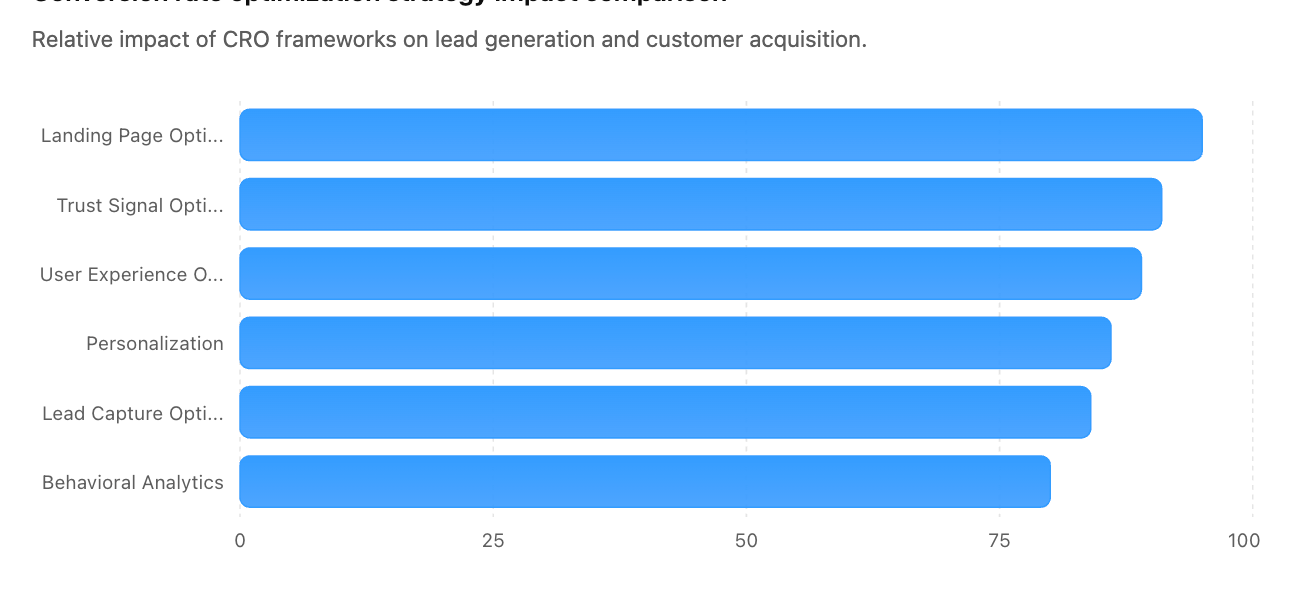
COMPARISON SUMMARY
━━━━━━━━━━━━━━━━━━━━━━━━━━
LANDING PAGE OPTIMIZATION
Strengths
Directly improves the pages responsible for generating leads and sales.
Benefits
Can increase conversions without requiring additional traffic investment.
Weaknesses
Requires continuous testing and performance analysis.
━━━━━━━━━━━━━━━━━━━━━━━━━━
TRUST SIGNAL OPTIMIZATION
Strengths
Builds confidence and reduces purchase hesitation.
Benefits
Strengthens credibility across the entire customer journey.
Weaknesses
Depends on the availability of strong proof points and customer feedback.
━━━━━━━━━━━━━━━━━━━━━━━━━━
USER EXPERIENCE OPTIMIZATION
Strengths
Reduces friction and improves website usability.
Benefits
Enhances engagement, satisfaction and conversion performance.
Weaknesses
Often requires technical implementation and ongoing maintenance.
━━━━━━━━━━━━━━━━━━━━━━━━━━
PERSONALIZATION
Strengths
Creates highly relevant customer experiences.
Benefits
Improves engagement and conversion rates through tailored messaging.
Weaknesses
Requires significant data, technology and segmentation capabilities.
━━━━━━━━━━━━━━━━━━━━━━━━━━
LEAD CAPTURE OPTIMIZATION
Strengths
Transforms anonymous visitors into qualified prospects.
Benefits
Supports measurable lead generation and sales pipeline growth.
Weaknesses
Poorly designed forms can reduce completion rates.
━━━━━━━━━━━━━━━━━━━━━━━━━━
BEHAVIORAL ANALYTICS
Strengths
Provides deep insight into user behavior and friction points.
Benefits
Supports more informed optimization decisions.
Weaknesses
Requires expertise to interpret data accurately.
Businesses investing in conversion rate optimization should focus on improving the entire customer journey rather than relying on isolated changes. Landing page enhancements, trust signals, user experience improvements, personalization, lead capture systems and behavioral analytics each contribute unique value. Organizations that combine these frameworks strategically are often able to generate more leads, increase customer acquisition efficiency and maximize revenue from existing website traffic.