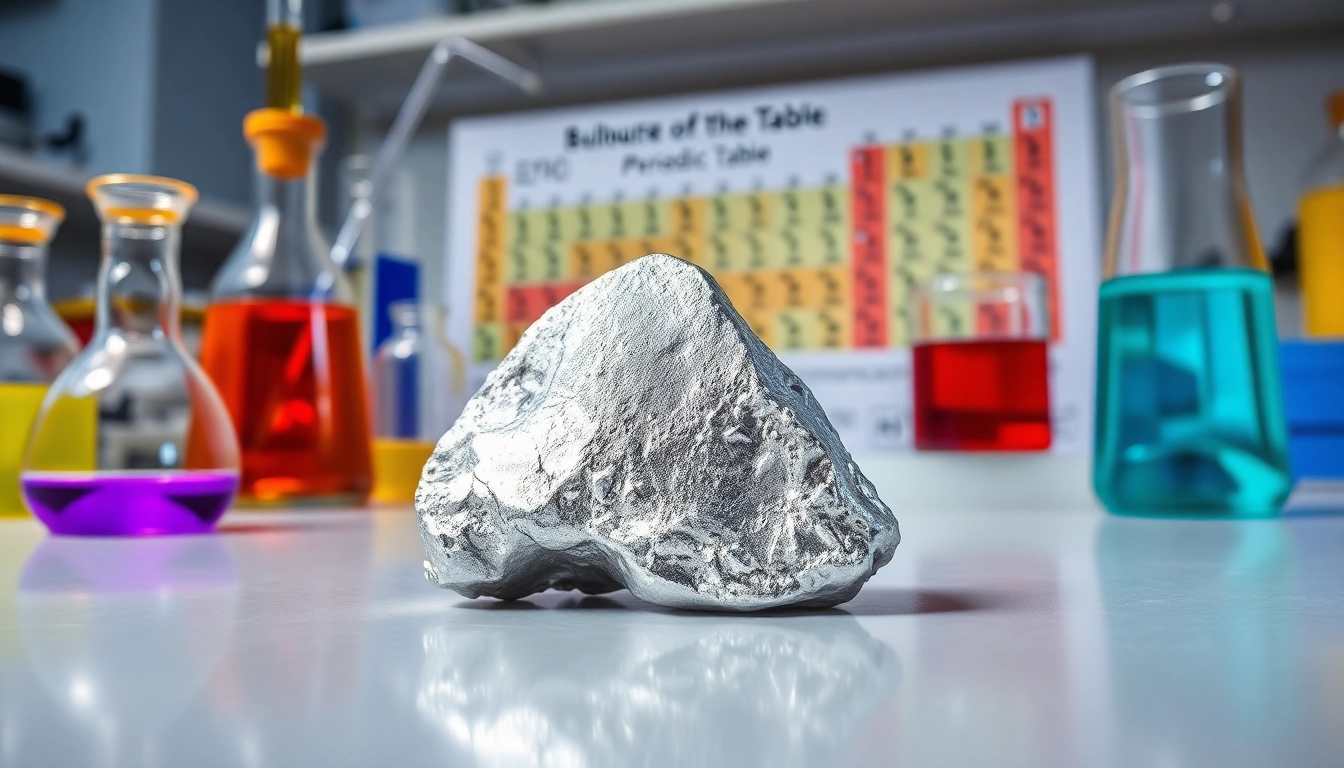
Understanding Antimony: An Overview
Antimony, represented by the symbol Sb and atomic number 51, is a lustrous grey metal or metalloid that has garnered significant attention for its unique properties and applications. Found primarily in nature as the sulfide mineral stibnite, antimony has historical roots that date back to ancient civilizations, when it was recognized for various uses. Its role in modern technology and industry continues to grow, especially given its importance in electronics and materials science. For those interested in exploring the intricacies of antimony, this guide serves as a comprehensive resource on its properties, uses, safety considerations, and future trends.
What is Antimony?
Antimony is a metalloid that displays both metallic and non-metallic properties. It commonly appears in two allotropes: a metallic form, which is shiny, brittle, and silvery, and a non-metallic form, which is a yellow powder. This element is crucial in several industrial applications due to its ability to harden alloys and increase resistance to heat and electricity.
Chemical Properties of Antimony
With an atomic mass of 121.76 u and a melting point of 1,167°F (630.6°C), antimony is classified in the chemical series of metalloids and toxic heavy metals. Its ability to bond with various elements, particularly sulfur, makes it a key player in the production of several antimony compounds used across different industries. The element also exhibits interesting behavior under heat, as it can form complex compounds that showcase its versatility.
Historical Context of Antimony
The history of antimony is rich and varied. Known since ancient times, it has been used in traditional medicine, cosmetics, and as a pigment for over 3,000 years. Antimony sulfide was employed in the creation of various compounds, and during medieval times, it became widely recognized in metallurgical processes. Notably, antimony has shaped industrial practices throughout history, paving the way for modern technological advancements.
The Uses of Antimony in Various Industries
Antimony in Electronics
One of the foremost uses of antimony is in the electronics sector. Its unique properties make it suitable for manufacturing semiconductors and flame-retardant materials. Antimony trioxide, a compound of antimony, is often used as an additive in plastics, textiles, and other materials requiring fire resistance. The growth of electronic devices has increased the demand for antimony compounds, enhancing its significance in contemporary manufacturing.
Antimony in Alloy Production
Antimony is indispensable in the production of various alloys. When blended with lead, it increases hardness and durability, making it essential for batteries and solder. Additionally, antimony-antimony alloys are employed in the production of pewter, a traditional metal alloy used in decorative items and utensils. Its role in enhancing the mechanical properties of these materials makes it a staple in metalworking and manufacturing industries.
Medical Applications of Antimony
In medicinal contexts, antimony compounds were historically used in treatments, particularly in ancient medicine as a laxative and in contemporary applications for treating specific conditions. For instance, antimony potassium tartrate is recognized for its effectiveness against certain parasitic infections. However, due to toxicity, its use has declined, and modern medicine explores safer alternatives.
Health and Safety Considerations Regarding Antimony
Toxicity and Health Risks
Although antimony has various applications, it also poses significant health risks. Exposure to antimony can lead to respiratory issues and skin irritation. Ingesting or inhaling antimony dust can adversely impact the lungs and other organs. In workplace settings, strict adherence to safety protocols is essential to minimize exposure and protect health.
Handling Antimony Safely
To mitigate the risks associated with handling antimony, comprehensive safety measures are necessary. Workers should wear personal protective equipment (PPE) such as gloves and masks, and ensure adequate ventilation in areas where antimony is processed. Regular training on safety protocols can help reinforce best practices and prevent accidents in industrial settings.
Environmental Impact of Antimony
Antimony's environmental footprint is another critical consideration. Mining and processing antimony can result in soil and water contamination, raising concerns about its ecological effects. Researchers advocate for sustainable practices in antimony mining to reduce the negative environmental consequences and protect natural resources for future generations.
Antimony Production and Supply Chain
Global Sources of Antimony
The primary source of antimony is stibnite ore, found in countries such as China, Russia, and Bolivia. China dominates the global market, accounting for a significant portion of antimony production. This geographical concentration raises concerns about supply chain security, prompting discussions about diversifying sources and increasing recycling efforts for antimony-containing products.
Production Processes
Antimony production involves several processes, including mining, extraction, and refining. The most common method of extraction is hydrometallurgy, where sulfur compounds are used to separate antimony from its ore. This process involves a series of chemical reactions to isolate pure antimony for various applications, underscoring the chemical transformations that antimony undergoes during production.
Market Dynamics and Pricing of Antimony
Antimony markets are subject to fluctuations based on supply and demand dynamics. Factors such as global economic conditions, technological advancements, and environmental regulations play crucial roles in pricing. As industries innovate and find new applications for antimony, monitoring market trends becomes essential for producers and consumers alike.
Future Trends and Research on Antimony
Innovations in Antimony Applications
Ongoing research into the properties and applications of antimony is likely to lead to new developments. Innovations such as antimony-based nanomaterials show promise in enhancing electronic devices and renewable energy technologies. The potential advantages of these advancements could redefine the utilization of antimony in various sectors, fostering sustainable industrial practices.
Research Initiatives on Antimony
Research initiatives are actively exploring the dual role of antimony as both a critical material and a toxic substance. Studies focusing on safe handling, recycling, and alternative uses are increasingly important in response to growing environmental awareness. Institutions and organizations are working collaboratively to understand antimony's impact and develop supportive frameworks for its responsible use.
Impact of Legislation on Antimony Use
Legislative measures concerning antimony usage are evolving, reflecting increasing concern for health and environmental safety. Governments may impose stricter regulations on antimony production and its applications. It will be essential for industries to adapt to these changes, incorporating best practices and innovative solutions to comply with responsible legislation.
Frequently Asked Questions
What are the main uses of antimony?
Antimony is widely used in electronics, alloy production, and specific medical applications due to its unique properties.
Is antimony toxic?
Yes, antimony can pose health risks if ingested or inhaled, leading to respiratory issues and skin irritation.
Where is antimony primarily sourced?
Antimony is primarily sourced from stibnite ore, found in various countries, notably China and Russia.
How is antimony used in electronics?
In electronics, antimony is utilized in semiconductor devices and as a flame retardant in various materials.
What safety measures are necessary when handling antimony?
Use protective equipment, work in well-ventilated areas, and follow safety guidelines to minimize exposure risks.