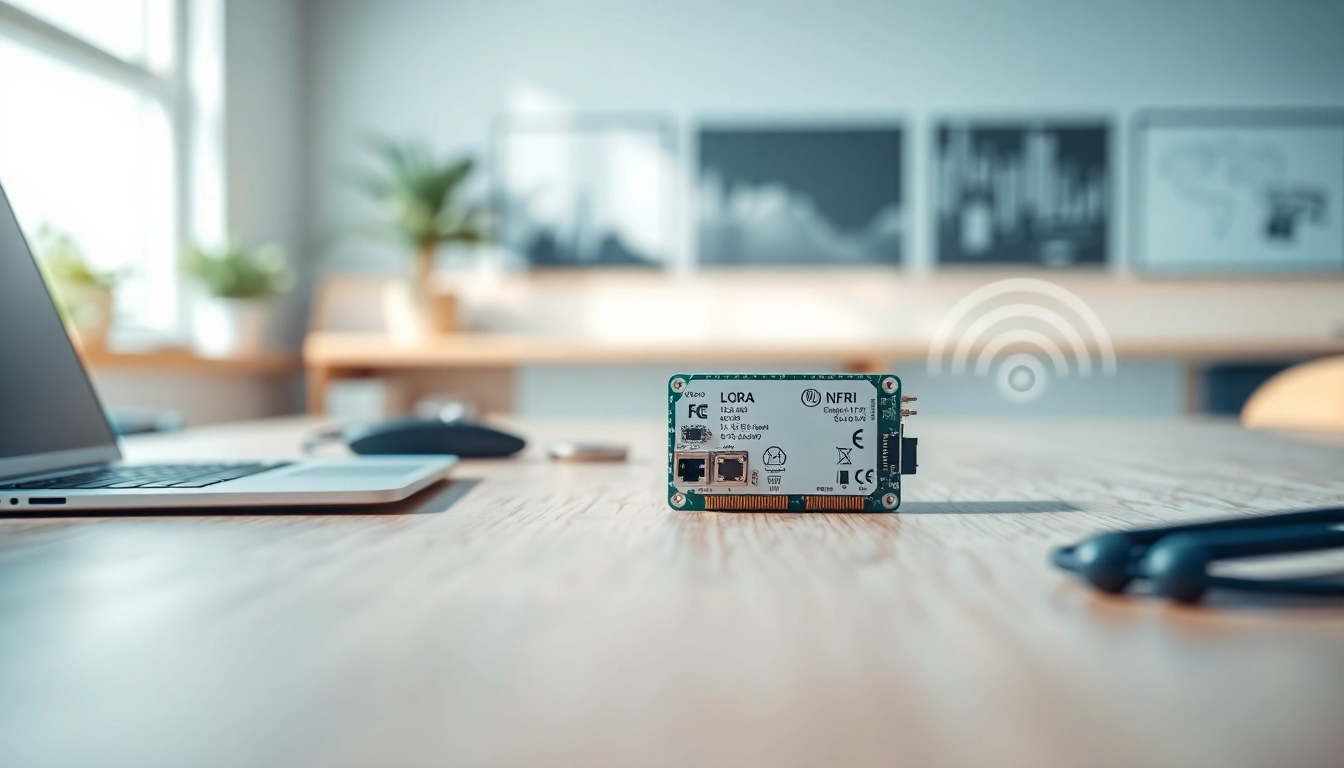
Understanding the LoRa Module
The LoRa (Long Range) module represents a significant advancement in wireless communication technology, designed specifically for the Internet of Things (IoT) applications. By leveraging unique modulation techniques, LoRa modules enable long-distance communication while consuming minimal power. This guide will explore the various aspects of LoRa technology—its features, applications, and benefits—providing readers with a thorough understanding of how to utilize these devices effectively in their projects. A deeper dive into LoRa module capabilities will reveal its potential to transform IoT deployments into robust and reliable systems.
What is a LoRa Module?
LoRa modules utilize a spread spectrum modulation technology derived from chirp spread spectrum (CSS) that enables devices to communicate over long distances. Typically, LoRa operates in unlicensed frequency bands, making it cost-effective for various applications. The modules consist of a transceiver that transforms data from the application layer to radio waves that can be transmitted over long distances—often exceeding 10 km in rural settings and 2-5 km in urban environments. They are commonly employed in conjunction with gateways to connect to the cloud, which facilitates real-time data transmission and management.
Key Features and Specifications
LoRa modules stand out due to their unique specifications. These include:
- Long Communication Range: They can transmit data over distances ranging from 2 km to over 15 km, depending on the environment.
- Low Power Consumption: LoRa technology operates on low power, allowing devices to run for years on small batteries.
- High Capacity: A single LoRa gateway can connect thousands of devices, enabling scalable networks.
- Adaptive Data Rate (ADR): This feature optimizes the data speed according to the channel conditions, ensuring efficient use of bandwidth.
- End-to-End Encryption: Security is paramount; thus, LoRa implements AES encryption to protect data in transit.
Applications of LoRa Technology
LoRa modules are versatile, finding applications in various sectors including:
- Agriculture: Monitoring soil moisture levels and controlling irrigation systems.
- Smart Cities: Enhancing urban infrastructure through smart lighting and waste management systems.
- Logistics: Tracking goods in transit and managing supply chains efficiently.
- Environmental Monitoring: Measuring factors like air quality, temperature, and humidity.
- Healthcare: Remote patient monitoring and managing medical equipment.
Benefits of Using LoRa Modules
Long-Range Communication Advantages
The primary advantage of LoRa modules is their long-range capabilities. Traditional short-range communication protocols (like Wi-Fi or Bluetooth) cannot match the range offered by LoRa, which is capable of maintaining connectivity over extensive distances. This makes it particularly advantageous in rural or sprawling environments where devices are spaced far apart, yet need reliable communication without the need for a dense network of repeaters or access points.
Low Power Consumption Insights
Power efficiency is a cornerstone of IoT devices operating on battery. LoRa technology supports this by enabling devices to enter low-power states, reducing idle consumption significantly. This means that devices can be deployed in remote locations for extended periods without the need for frequent battery replacements or recharging, leading to lower operational costs and minimized maintenance efforts.
Cost-Effective Solutions for IoT
The deployment of LoRa networks is not only efficient but also economical. By using unlicensed frequencies, organizations can reduce the costs associated with licensing and infrastructure. Furthermore, the ability to connect a high number of nodes to a single gateway minimizes hardware expenses, making LoRa an attractive option for large-scale IoT implementations.
Setting Up Your LoRa Module
Required Tools and Components
Before diving into setup, it's essential to gather the necessary components. A typical setup for a LoRa module includes the following:
- LoRa module (like the popular RFM95W or SX1276)
- Microcontroller (Arduino, Raspberry Pi, or ESP32)
- Power supply (battery or USB)
- Jumper wires for connectivity
- Development environment (such as the Arduino IDE or PlatformIO for coding)
Installation Step-by-Step
Setting up your LoRa module integrates hardware and software aspects:
- Connect the Hardware: Use jumper wires to connect the LoRa module to your microcontroller following the pin mapping provided in the module’s datasheet.
- Install the Development Environment: For Arduino, download and install the Arduino IDE. Include necessary libraries like
SX1276WiFi.hfor LoRa functionality. - Write the Code: Develop a program that initializes the LoRa module and sends a test message. Utilize several example codes available to simplify this step.
- Upload and Test: Upload the code to your microcontroller and observe the serial console output to ensure communication is established.
Troubleshooting Common Issues
While setting up your LoRa module, you might run into common issues. Here are some potential problems and their solutions:
- No Transmission: Check your connections and ensure that your antenna is properly attached and unobstructed.
- Poor Range: Test using a different location with fewer obstacles. Environmental factors greatly impact signal strength.
- Intermittent Connectivity: If you're experiencing dropouts, adjust the ADR settings to boost data rates or change power levels.
Integrating LoRa Modules into IoT Projects
Connecting to Sensors and Actuators
Integrating sensors and actuators with LoRa modules allows for powerful IoT applications. Connecting a temperature sensor, for example, involves wiring the sensor to the microcontroller and then coding the LoRa module to send data periodically. Actuators, such as motors or solenoids, can also be controlled remotely, enabling actions like irrigation or HVAC adjustments from a distance.
Best Practices for Data Transmission
To optimize data transmission in a LoRa network, consider the following best practices:
- Scheduling Data Send: Send data at scheduled intervals instead of continuously to conserve power and reduce network traffic.
- Data Compression: Employ data compression techniques to minimize the payload size and maximize transmission efficiency.
- Use Message Acknowledgments: Implement message acknowledgment to ensure that critical data is successfully received.
Case Studies: Successful Implementations
Several organizations have successfully integrated LoRa technology into their projects:
- Smart Agriculture: A farm in California applied LoRa modules to monitor soil moisture across vast fields, enabling precision irrigation techniques that saved water.
- City-wide Environmental Monitoring: A city used LoRa sensors to track air quality over an extensive area, allowing for data-driven environmental decisions.
- Logistics Management: A logistics company implemented LoRa devices in their trucks to track goods in real-time, improving delivery efficiency.
Future Trends in LoRa Technology
Emerging Innovations in Communication
The future of LoRa technology looks promising, with continuous innovations focusing on increasing operational efficiency and expanding the application landscape. Emerging technologies like AI are set to enhance predictive analytics, which will lead to smarter IoT solutions. Enhanced protocols for data integrity and integration between different IoT communication protocols will unify the ecosystem.
Impact of 5G on LoRa Networks
As 5G networks roll out globally, their interaction with LoRa technology will create new opportunities and challenges. While 5G provides high-speed data transfer, LoRa continues to shine in scenarios requiring long-range coverage. Ultimately, a hybrid approach could emerge where both technologies complement each other, allowing for a comprehensive solution that harnesses the strengths of both systems.
Preparing for the Next Generation of IoT
The next wave of IoT development will see an increased focus on sustainability and smart technology convergence. LoRa modules are likely to play a crucial role in building eco-friendly smart cities through efficient energy management and resource optimization. Preparation is essential; developers must remain informed about advancements in LoRa technology and integrate them into their future projects to remain competitive.