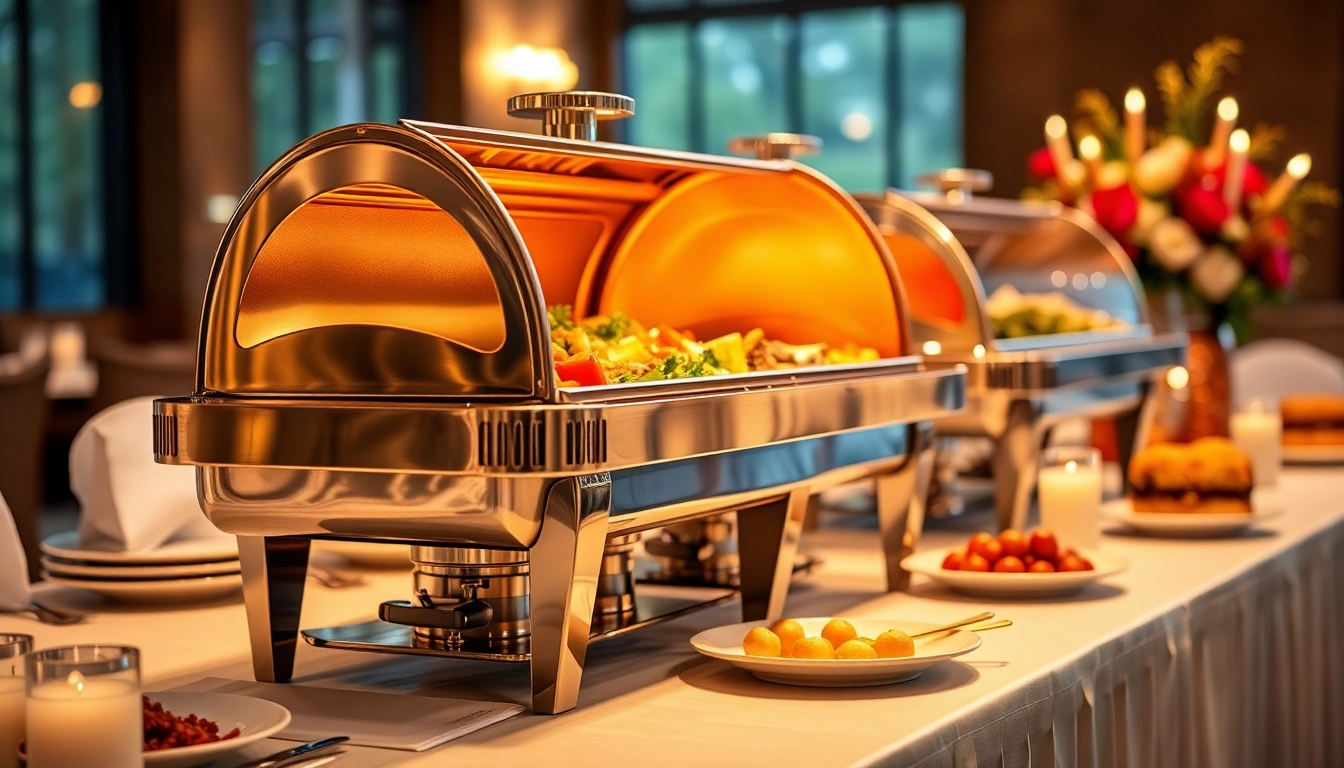
Understanding Chafing Dishes
What is a Chafing Dish?
A chafing dish is a versatile serving tool that maintains the temperature of food items over an extended period, making it indispensable for catering, buffets, and large gatherings. Designed with a water pan and a food pan, chafing dishes utilize indirect heat to keep the food warm without drying it out. They usually operate on gel fuel or electric heating elements, offering flexibility depending on the setting. Equipped with lids, chafing dishes also protect food from contaminants while enhancing presentation.
Common Uses and Benefits
Chafing dishes serve various purposes, making them a staple in both professional catering environments and home settings. They are commonly used at:
- Buffets: Ideal for self-serve events, allowing guests to choose portions without assistance.
- Banquets: Perfect for elegant presentations where food must retain its appeal.
- Outdoor Events: Useful for picnics and barbecues, especially when paired with gel fuel for easy setup.
- At-home Parties: Simplifies meal serving for friends and family, letting hosts enjoy the event.
Benefits include temperature control to enhance the eating experience, prevention of food spoilage, and the ability to serve multiple dishes simultaneously in a professional-looking manner.
Types of Chafing Dishes Available
Chafing dishes come in various styles and materials, catering to different culinary, aesthetic, and occasion needs. Some popular types include:
- Stainless Steel: Durable and resistant to rust; ideal for both formal and casual occasions.
- Aluminum: Lightweight and cost-effective; suitable for disposable use at outdoor events.
- Ceramic or Stoneware: Adds a rustic or elegant touch, perfect for farms or upscale parties.
- Enameled: Offers vibrant colors; a visually appealing option for themed events.
Factors to Consider When Choosing a Chafing Dish
Size and Capacity
Selecting the right size and capacity is critical for ensuring that your chafing dishes can accommodate the expected volume of food. Typically available in sizes ranging from 4 quarts to 8 quarts, you should determine the number of guests and types of dishes you plan to serve. For instance, larger events might require multiple chafing dishes of varying sizes to present a buffet-style spread.
Material and Durability
The material of a chafing dish directly influences its durability and maintenance requirements. Stainless steel is robust and resistant to corrosion, making it a popular choice for various events. Conversely, aluminum chafers are more lightweight but may dent easily. Always consider the setting, frequency of use, and whether you prefer reusable or disposable options when selecting material.
Design and Aesthetic Appeal
A chafing dish is not just a functional item; it also contributes to the overall presentation of your food. Innovative designs, including modern, traditional, and themed styles, can elevate your dining experience. Ensure that the aesthetic of your chafing dish aligns with the theme of your event. Remember to also consider practical aspects such as accessibility and temperature retention when designing your setup.
How to Maintain Your Chafing Dish
Cleaning Techniques
Proper maintenance begins with effective cleaning techniques. After each use, it’s essential to let the chafing dish cool down before cleaning. Utilize warm, soapy water and a non-abrasive sponge to thoroughly clean the surfaces. Avoid scrubbing pads that could scratch the finish, especially for polished stainless steel. Rinse well to ensure that no soap residue remains, which could alter the taste of future meals.
Proper Storage Guidelines
To extend the lifespan of your chafing dish, proper storage is crucial. Store it in a dry, clean environment and stack them if necessary. Use protective covers when storing to prevent scratches or dust accumulation. For nested dishes, ensure they are completely dry to prevent mold and odor buildup.
Long-term Care Tips
Investing in your chafing dish goes beyond cleaning and storage; it involves regular inspections and care. Look for rust or signs of wear, especially around joints and connections. Periodically polish metal surfaces with appropriate cleaners and cloths to maintain their shine. For dishes with removable components, ensure they are securely attached before use to prevent accidents.
Enhancing Your Serving Experience with Chafing Dishes
Creative Food Arrangement Ideas
Creative food arrangement is as important as the dish itself. Using tiered setups can create visual interest, while color contrasts among dishes can attract guests’ attention. Consider incorporating labels next to each dish that describe the food and its ingredients to enhance guest engagement and promote transparency for food allergies.
Presents and Garnishes
An elegant presentation can dramatically affect the appeal of your food. Use fresh herbs, edible flowers, or colorful condiments to enhance the visual appeal of your offerings. Incorporate serving ware that matches the style of your chafing dish to provide a cohesive look, which adds to the overall guest experience.
Using Accessories Effectively
Accessories such as serving utensils, optional lids, and heat sources can transform your chafing dish's functionality. Ensure you have plenty of serving spoons and forks available to facilitate smooth guest flow. If using an electric chafing dish, ensure an appropriate power source is available nearby to avoid running into technical issues during your event.
FAQs About Chafing Dishes
How do you heat a chafing dish?
Chafing dishes typically utilize gel fuel or electric heating elements to maintain food temperature while serving.
What sizes do chafing dishes come in?
Chafing dishes are available in various sizes, typically ranging from 4 to 8 quarts, suitable for different serving needs.
Can chafing dishes be used outdoors?
Yes, many chafing dishes are designed for outdoor use; ensure you use appropriate heating methods and sturdy equipment.
Are there different covers for chafing dishes?
Yes, chafing dishes often come with various cover types, including flat lids and domed lids, to suit different serving styles.
How do you clean a chafing dish?
After it cools, clean the chafing dish with warm soapy water and a non-abrasive sponge; avoid harsh chemicals.